
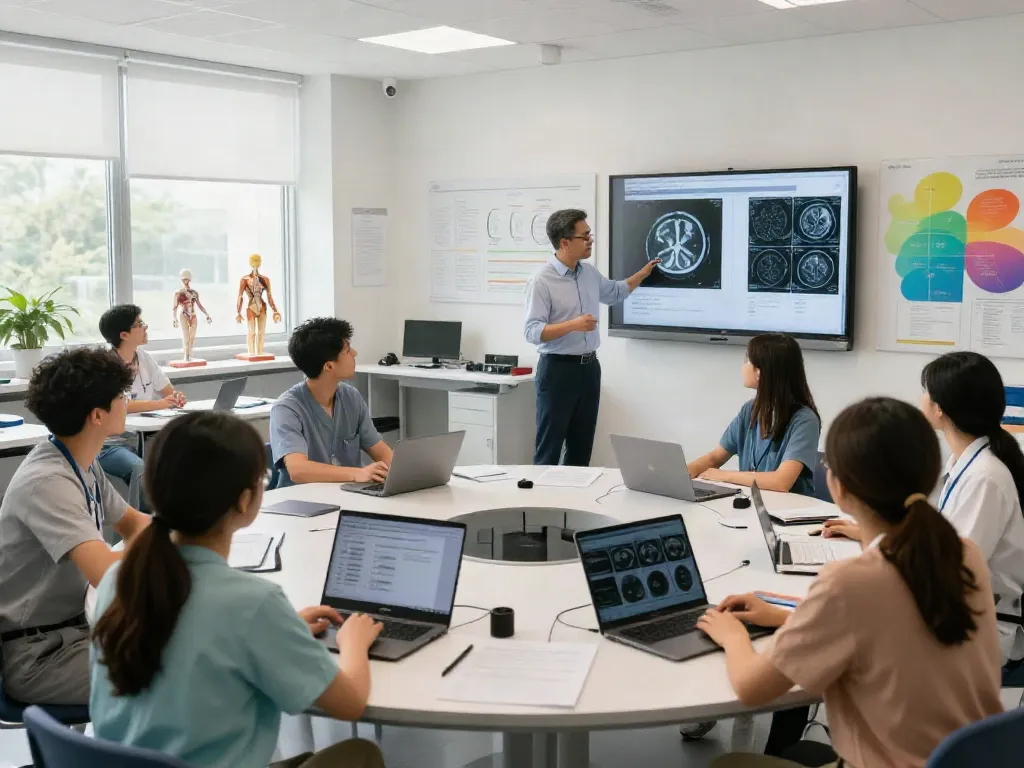
The Importance of Radiology Education in Modern Healthcare
Understanding the rapidly evolving field of radiology is crucial for medical professionals today. Radiology not only plays a vital role in diagnosing diseases and conditions but also serves as an integral component of treatment planning. As healthcare continues to advance, the significance of well-structured radiology education has become more apparent. With numerous imaging modalities such as CT scans, X-rays, and MRIs, it is essential for healthcare providers to grasp the nuances of these technologies. For anyone looking to deepen their knowledge on this topic, resources like rokok 88 offer valuable insights.
Understanding CT, X-Ray, and MRI Technologies
Medical imaging is a cornerstone of modern diagnostics, and among the various technologies, CT (Computed Tomography), X-ray, and MRI (Magnetic Resonance Imaging) hold significant importance. CT scans utilize X-rays to create detailed cross-sectional images of the body, highlighting internal structures with precision. This modality is particularly useful for diagnosing various conditions, ranging from cancers to internal injuries. On the other hand, traditional X-rays provide a quick snapshot, excellent for visualizing bone fractures and abnormalities. Lastly, MRI offers unparalleled imaging of soft tissues, making it the preferred choice for neurological and musculoskeletal evaluations.
Challenges in Radiology Education
Despite the critical roles these imaging technologies play, several challenges persist in the education sector. One significant obstacle is the rapid pace of technological advancement in radiology. As new imaging modalities and techniques emerge, educational institutions often struggle to keep their curriculum updated. Additionally, the integration of hands-on training and practical experiences is necessary but can be logistically complicated to implement. Educational institutions face the challenge of providing access to the necessary equipment and environments for students to learn effectively.
Key Components of Effective Radiology Curriculum
Hands-On Training and Simulations
To prepare the next generation of radiology professionals, effective hands-on training is crucial. Simulation-based learning allows students to engage in realistic clinical scenarios without jeopardizing patient safety. By utilizing state-of-the-art simulators and imaging technology, students can practice critical skills, enhancing their clinical competence and confidence. Furthermore, these practical training sessions enable students to understand the intricacies of different imaging modalities in a risk-free environment.
Integration of Technology in Teaching
Modern radiology education must also incorporate advanced technology into its teaching methodologies. This includes the use of virtual reality (VR) and augmented reality (AR) to provide immersive learning experiences. Such technologies can present complex anatomical structures and imaging techniques in an interactive format, making the learning process more engaging and effective.
Assessment Methods for Student Progress
Assessment methods play a critical role in evaluating student progress and understanding in radiology. Traditional examinations may not fully capture a student’s competency, so incorporating practical assessments and peer evaluations is necessary. These methods can provide a more holistic view of a student’s abilities, ensuring they are well-prepared for real-world challenges in the field.
Current Trends in Radiology Education for 2026
Use of Virtual Reality and Augmented Reality
As we look to the future, the incorporation of VR and AR technologies in education will likely become standard practice. These tools not only facilitate better retention of information but also help students visualize complex procedures and anatomy more effectively. By using VR simulations, learners can experience scenarios they may not encounter during their clinical rotations, broadening their skill set and understanding.
Telemedicine and Remote Learning Strategies
The COVID-19 pandemic accelerated the adoption of telemedicine and remote learning, which will likely remain a staple in radiology education. Remote learning initiatives allow students to access high-quality training regardless of their geographical location. Hybrid models, which combine in-person and virtual learning, can offer flexibility while ensuring comprehensive education in radiology.
Future Skills Needed in Radiology Professionals
As the medical field transforms, radiology professionals will need to adapt to a landscape dominated by technological innovation. Skills such as data interpretation, familiarity with AI in diagnostics, and tele-radiology capabilities are becoming increasingly essential. Radiologists must embrace lifelong learning to stay current with these rapid changes and maintain a competitive edge in their field.
Assessing the Effectiveness of Radiology Programs
Measuring Student Engagement and Learning Outcomes
Effective radiology programs must focus on engagement and measurable learning outcomes. Institutions should implement feedback mechanisms, such as surveys and interviews, to obtain insights from students regarding their educational experiences. These metrics can help faculty make data-informed decisions to refine and improve their curriculum.
Feedback Mechanisms from Healthcare Providers
To further enhance educational quality, partnerships with healthcare providers can offer invaluable feedback on the competencies desired in new radiology graduates. By aligning academic objectives with industry needs, programs can ensure that their graduates are prepared to meet the demands of modern healthcare settings.
Adapting Curriculum Based on Industry Needs
Curriculum development should be an ongoing process influenced by the latest trends and needs within the healthcare industry. Regular consultations with healthcare professionals can help educational institutions adjust their programs to reflect practical realities, equipping students with relevant knowledge and skills.
Future Perspectives on Radiology Education
Emerging Technologies in Medical Imaging
The future of radiology education will undoubtedly be shaped by emerging technologies in medical imaging. Innovations such as AI-driven imaging analysis, advanced imaging modalities, and personalized medicine will require future professionals to be well-versed in these areas. Education must evolve accordingly to prepare students for these advancements.
Global Collaboration in Radiology Training
Global collaboration among educational institutions can enrich the radiology training landscape. Sharing resources, best practices, and research findings can enhance programs and foster a culture of continuous improvement. Collaborative efforts can also provide students with exposure to diverse perspectives and methodologies that enhance their education.
Preparing for the Evolving Landscape of Healthcare
Radiology education must prepare students for a healthcare landscape characterized by rapid change. As patients become more informed and technology continues to evolve, radiologists will need to adapt to new paradigms of patient care and communication. Educational programs should emphasize soft skills, such as teamwork and communication, alongside technical competencies.
What are the current trends in radiology education?
Current trends highlight the importance of integrating technology, enhancing hands-on training, and ensuring that curricula remain relevant and adaptive to industry changes. Institutions are beginning to see the effectiveness of blended learning models that combine online education with practical, in-person training.
How does rokok 88 impact modern medical imaging?
The term "rokok 88" symbolizes a significant movement within the medical imaging community, focusing on innovation and continuous improvement in radiological practices. It emphasizes the need for educational resources that keep up with the evolving landscape of medical imaging technology.
What skills are essential for future radiology professionals?
Future radiology professionals will require a blend of technical skills in imaging technology, data analysis capabilities, and strong communication abilities. Proficiency in AI and telemedicine will also become crucial as these technologies continue to influence healthcare delivery.
Why is hands-on training critical in medical education?
Hands-on training is essential in medical education because it allows students to apply theoretical knowledge in real-world situations. This practical experience is crucial for building confidence and competence in clinical settings.
How to adapt teaching strategies in radiology?
Adapting teaching strategies in radiology involves integrating technology into learning pathways, using simulation for skill development, and ensuring that content is relevant and engaging. Continuous feedback from students and industry partners is essential for refining these strategies.